
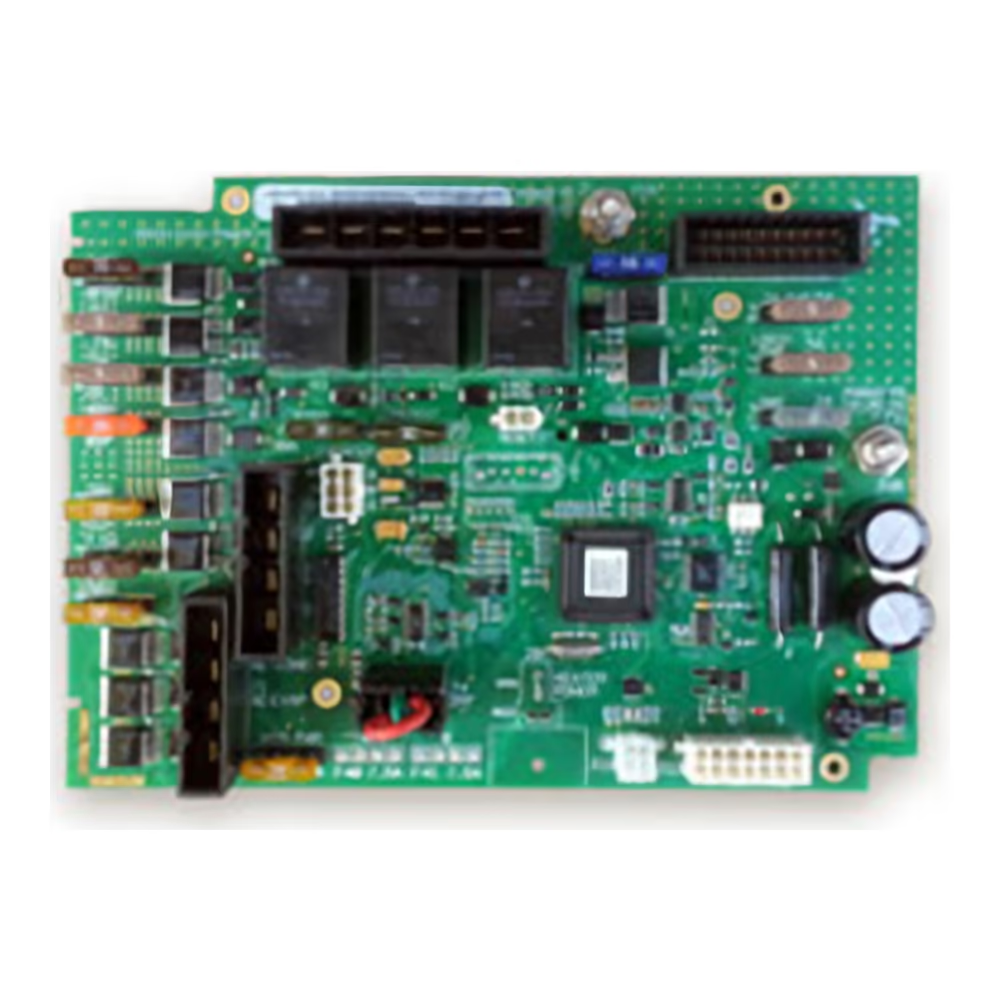
Thermo King TriPac Controller Repair (Interface Board Rev 1.5 / 1.6)
Repair overview
Component-level repair of the Thermo King TriPac APU interface board, the controller of the TriPac before the Evolution: Rev 1.6 boards (part numbers 45-2439 and 45-2526) and earlier boards (45-2137, 45-2179, 45-2239 and 845-2398). Before you ship a TriPac that “won’t start”, check the on-board fuses, the green status LED and the reset circuit — the guide below shows how. We repair the power, relay-drive and microprocessor sections and bench-test the board before return.
Common Failure Symptoms We Fix
Status LED Off or On Steady
[Eng] Alarm That Will Not Clear
On-Board Fuses That Keep Opening
Our Repair Process Includes:
- Interface Board Power and Relay-Drive Repair
- Rev 1.5 and Rev 1.6 Boards
- Bench Testing Before Return
Version 1.6 Interface Board Fuses
A TriPac that “won’t start” often has an open fuse, a tripped reset circuit or a switch in the wrong position rather than a failed interface board. The table lists the fuses on the Rev 1.6 board, what each one feeds and when to suspect the board — so you can rule out a fuse before shipping it. Rev 1.5 boards use the same fuse numbers (F1–F17); their 50A main power fuse (F16) is in the harness near the alternator.
| Fuse | What It Means | When It’s the Controller |
|---|---|---|
| F3 (5A) | Microprocessor power supply. | With F3 open the board has no logic supply: the green status LED stays off and nothing runs. Replace it and re-test. If it opens again right away, the board has a fault on its supply — repairable. |
| F8 (7.5A) | 8FET circuit — feeds the APU engine switch and, through the reset circuit, the board’s 8 input. | An open F8 leaves the 8 input without power, which sets an [Eng] alarm even with good oil pressure and temperature. Check it before condemning the board. |
| F1 (30A) / F2 (30A) / F7 (40A) | Starter (8S), preheat (H) and fuel solenoid pull-in (8DP). | One of these open stops the start: no crank, no preheat, or the engine cranks but will not run. After three failed start attempts the board sets [Eng]. |
| F13 (7.5A) | Compressor clutch (7CL). | With F13 open the clutch never engages and there is no cooling. A fuse that keeps opening points to the clutch coil or its wiring first. |
| F10 (15A) / F11 (20A) / F12 (20A) | Pre-cooler fan, condenser fan and evaporator blower. | A fan fuse that opens again right after replacement usually means a seized motor or a shorted harness, not the board. |
| F14 (5A) / F90 (20A) | Air heater on signal and air heater power. | With either open, heat mode does not start. Check them before suspecting the board or the heater. |
| F17 (2A) | Interface board chassis ground fuse. | Check it together with F3 whenever the board seems dead. |
Symptom Troubleshooting Guide
| Symptom | Likely Causes | How We Repair It |
|---|---|---|
| Green status LED off | Main Power off at the HMI, F3 or F17 open, or no battery feed to the board | The LED only turns on when Main Power is on at the HMI. Check F3, F17 and the battery feed. If the board has power and the LED stays off, the board is at fault |
| Green status LED on steady (not blinking) | The board failed its power-up self-test | Normal is one blink per second. Cycle Main Power once; if the LED stays on steady, the board needs repair |
| [Eng] alarm and the engine will not start | APU engine switch off, reset circuit tripped (low oil pressure, high coolant temperature or failed start), DPF regeneration switch off, no plug in the DPF option connector, or F8 open | On Rev 1.6 boards the reset button does not pop out or click — press it anyway to reset. If all of these are good and the 8 input still has no power, the board’s reset circuit is suspect |
| HMI control panel stays blank | Main Power not on, battery circuits, a loose HMI harness or a failed HMI | Check the HMI harness at the HMI and at the interface board and the circuit continuity, then try a known-good HMI |
| The replacement board does not fit the harness | Rev 1.6 boards are not backward compatible | Rev 1.6 uses plug-in connectors; earlier boards use terminal strips. Repairing the board you have keeps the harness as it is |
Frequently Asked Questions
How do I tell a Rev 1.6 board from an earlier TriPac board?
Rev 1.6 boards (February 2012 on) connect through plug-in connectors and have an on-board reset circuit and a DPF option connector. The Original (to April 2006), 1.0 (April 2006 – June 2007) and 1.5 (June 2007 – February 2012) boards use terminal strips, and their reset switch is mechanical: its button pops out when it trips.
Is this the same controller as the TriPac Evolution?
No. The TriPac Evolution uses a different control system with numeric alarm codes read in TK Monitor. It has its own repair page.
Which part numbers do you repair?
Rev 1.6 boards 45-2439 and 45-2526, and earlier TriPac boards 45-2137, 45-2179, 45-2239 and 845-2398.
1-Year Warranty
Every repair ships back bench-tested, with a 1-year warranty on the components we repaired or replaced, plus 15 days of coverage for any other functional problem after delivery.
Start Your Repair NowWhy Choose DCF?
- $150 Diagnostic — Fully Waived When We Complete the Repair
- 7–15 Business-Day Standard Turnaround
- Component-Level Repair
- Miami-Based Facility
- Standard ground return shipping paid by DCF